
Social platforms change their algorithms, ad costs keep rising, but your email list is yours. That is why email marketing for small business remains one of the most reliable ways to bring customers back again and again, without paying for every click.
This guide shows you how to build a list from scratch, which email automations to set up first, how to reach the inbox under the new Gmail and Yahoo rules and how to measure what email is really worth to your business.
Why does email marketing still work in 2026?
Because it combines three things no other channel offers at the same time: you own the audience, it is low cost per message and it reaches people who have already said yes to hearing from you.
The returns are strong. In Litmus’s 2025 State of Email research, the largest group of marketing leaders (35%) reported earning $10 to $36 for every $1 spent on email, and another 30% reported $36 to $50. For a small business, that usually means email is the cheapest way to win a second, third and tenth sale from the same customer.
- You own it: no algorithm decides whether your subscribers see your message.
- It compounds: every new subscriber adds to an asset that keeps paying back.
- It is personal: you can send the right message based on what someone bought or browsed.
- It automates: once set up, key emails send themselves while you run the business.
How do you build an email list from zero?
Never buy a list. Purchased contacts hurt deliverability, break privacy laws in many markets and rarely buy. Instead, give people a clear reason to join:
- Offer a real incentive. A first-order discount, free guide, checklist, sample or early access to new products.
- Use sign-up forms where people already are. Website header or footer, a timed pop-up, checkout, blog posts and your contact page.
- Collect in person too. A QR code at the counter, on receipts, packaging and event stands.
- Promote it on social media. Link to your sign-up page from Instagram, Facebook and WhatsApp, and mention it in your social media content.
- Ask for consent clearly. Tell people what they will receive and how often, and keep a record of when and how they signed up.
How do you choose an email marketing platform?
Popular options include Mailchimp, Klaviyo, Brevo, MailerLite and the email tools built into Shopify. Rather than chasing features, compare them on what you actually need:
| What to check | Why it matters | Good sign |
|---|---|---|
| Ecommerce integration | Lets you trigger emails from orders and browsing | Native Shopify or WooCommerce connection |
| Automations | Saves time and drives most email revenue | Visual flow builder with ready-made templates |
| Segmentation | Sends the right message to the right people | Segments by purchase, behaviour, location and language |
| Deliverability tools | Keeps you out of spam | Easy SPF, DKIM and DMARC setup and list cleaning |
| Pricing model | Costs grow with your list | Clear pricing by contacts or sends, with room to grow |
What are the 5 email automations every small business needs?
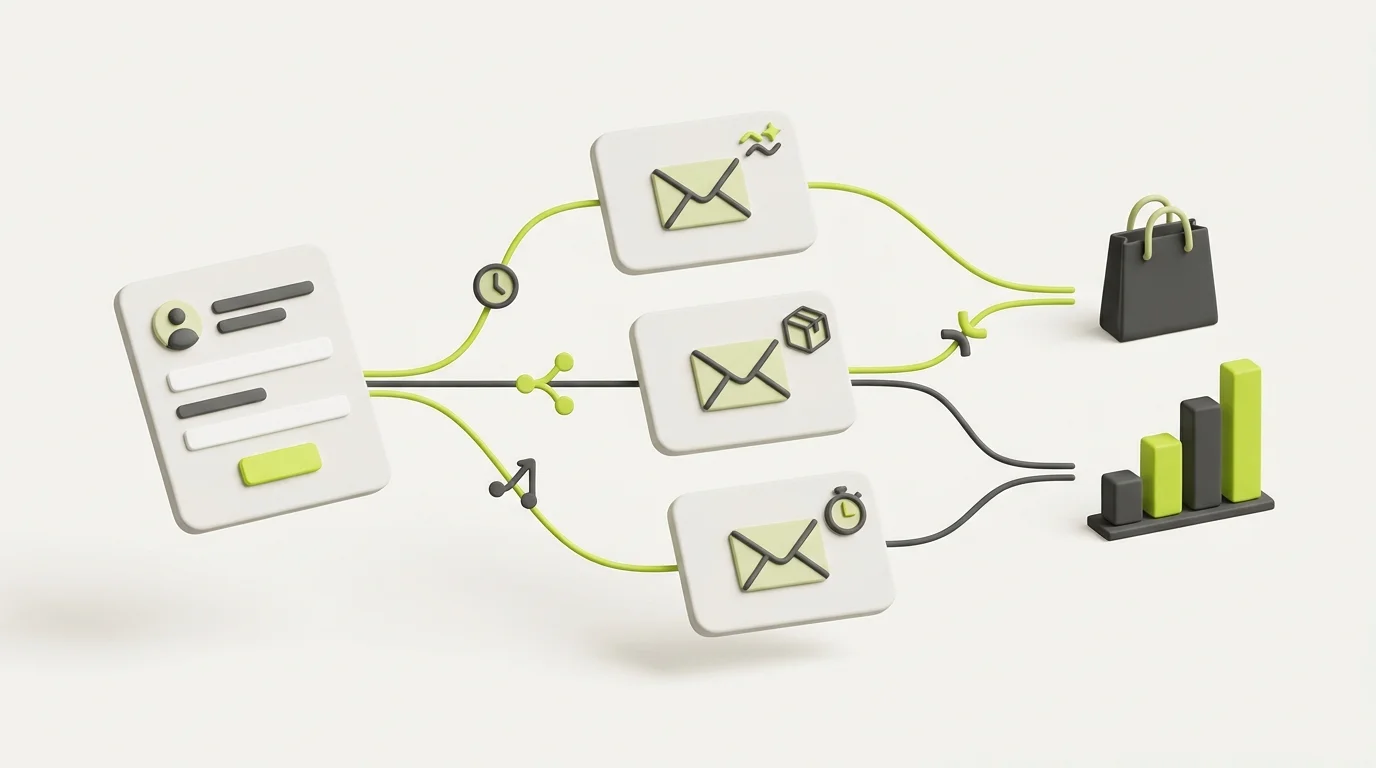
Automated emails are triggered by what a customer does, so they arrive at exactly the right moment. Start with these five:
- Welcome series: 2–4 emails that deliver the sign-up offer, tell your story and show your best sellers.
- Abandoned cart: a reminder within a few hours, then a follow-up with reviews or an answer to common doubts.
- Browse abandonment: a gentle nudge for people who viewed products but did not add them to the cart.
- Post-purchase: thank you, how-to-use tips, a review request and a cross-sell a few weeks later.
- Win-back: a “we miss you” offer for customers who have not bought in a while.
How do you write emails people open and click?
Beyond automations, send regular campaigns such as new arrivals, tips, stories and offers. A rhythm of one to four emails a month is a sensible starting point for most small businesses. To make each one count:
- Subject line: short, specific and honest, for example “Your 15% welcome gift expires Friday”.
- Preview text: use it to add a second reason to open instead of repeating the subject.
- One main goal: one clear call to action button per email.
- Mobile-first design: most emails are read on phones, so keep layouts simple and buttons large.
- Personalisation and language: use names, past purchases and, for multilingual audiences, the subscriber’s preferred language.
How do you land in the inbox, not spam?
Since 2024, Gmail and Yahoo have required bulk senders (those sending around 5,000 or more emails a day to their users) to meet stricter rules, and good practice now matters for every sender:
- Authenticate your domain: set up SPF, DKIM and DMARC for the domain you send from.
- Offer one-click unsubscribe: make leaving easy and honour requests quickly.
- Keep spam complaints low: stay well below a 0.3% complaint rate, ideally under 0.1%.
- Clean your list: remove bounced addresses and people who have not opened for months.
- Follow local law: rules such as Hong Kong’s Unsolicited Electronic Messages Ordinance, CAN-SPAM in the US and GDPR in Europe require honest sender details and a working unsubscribe option.
This is general information, not legal advice; check the rules in each market you email.
Which email marketing metrics should you track?
As a reference point, Mailchimp’s benchmark data shows an average open rate of about 35.6% and an average click rate of about 2.6% across all industries. Open rates are less reliable since Apple’s Mail Privacy Protection, so focus on the numbers closer to revenue:
| Metric | What it tells you | What to do if it is low |
|---|---|---|
| Click rate | Whether your content and offer interest people | Test clearer offers, fewer links and stronger buttons |
| Conversion rate | How many clicks become sales or bookings | Improve the landing page and checkout |
| Revenue per email | The true value of each send | Segment more and lean on automations |
| Unsubscribe and spam rate | Whether you are sending too often or off-target | Reduce frequency and target better |
| List growth rate | Whether your audience is growing | Improve your sign-up offer and form placement |
What email marketing mistakes should small businesses avoid?
- Buying or scraping lists: it damages your sender reputation and can break the law.
- Only sending discounts: constant sales train customers to wait; mix in value and stories.
- Sending the same email to everyone: segmentation almost always lifts clicks and sales.
- Skipping automations: welcome and abandoned cart flows are often the biggest earners.
- Ignoring the data: review results monthly and keep testing subject lines, offers and timing.
Final thoughts
Email marketing for small business is not about sending more emails; it is about sending the right ones. Build a list you own, switch on the five core automations, protect your deliverability and judge success by revenue, not opens. Combined with Google Ads and social media, email turns one-time buyers into loyal customers.
Want help setting it up? Explore our email marketing services or contact us for a free email marketing audit.