

Most online stores don’t have a traffic problem. They have a conversion problem. Across global benchmarks, roughly 97 out of every 100 visitors leave an ecommerce site without buying. If you could convince just one more of them to check out, many stores would see revenue grow by a third or more without spending another cent on ads.
That is what ecommerce conversion rate optimization (CRO) does. In this guide you’ll learn what a good ecommerce conversion rate looks like in 2026, how to find the leaks in your funnel, and 15 proven, practical ways to increase your conversion rate, whether you sell on Shopify, WooCommerce, Magento or a custom platform, and whether your customers are in New York, London, Dubai, Sydney or Singapore.
What is ecommerce conversion rate optimization?
Ecommerce conversion rate optimization is the process of increasing the percentage of website visitors who complete a purchase. Your conversion rate is calculated as:
Conversion rate = (Number of orders ÷ Number of sessions) × 100
So a store with 40,000 sessions and 800 orders a month converts at 2%. Lift that to 2.6% and you gain 240 extra orders every month from exactly the same traffic.
Good CRO is not about tricks, countdown timers or aggressive pop-ups. It is about removing friction, answering objections and making it easy for the right customer to say yes. Because it improves the return on every channel at once, including paid search, SEO, social media and email, CRO is usually the highest-leverage investment a growing online store can make.
What is a good ecommerce conversion rate in 2026?
Most industry studies put the average ecommerce conversion rate between 2% and 3% worldwide, with recent data from Contentsquare, Dynamic Yield and Littledata ranging from about 1.4% (median Shopify store) to 2.9%. A “good” rate depends heavily on what you sell, the device your shoppers use and where your traffic comes from.
| Segment | Typical conversion rate |
|---|---|
| Global ecommerce average | 2.0% – 3.0% |
| Desktop | 3.2% – 3.9% |
| Mobile | 1.8% – 2.8% |
| Food & beverage | 4.9% – 6.2% |
| Health & beauty | 3.0% – 5.0% |
| Fashion & apparel | 1.5% – 2.5% |
| Luxury & jewelry | 0.8% – 1.5% |
| Email traffic | 4.0% – 6.0% |
| Paid social traffic | 0.5% – 1.5% |
Two takeaways matter more than the averages. First, mobile now drives around three-quarters of ecommerce traffic but converts 40–50% worse than desktop, so mobile is usually where the biggest gains are hiding. Second, the only benchmark that really counts is your own: aim to beat last quarter, segment by segment.

How to find where your store is losing sales
Before you change a single button, find out where people drop off. Guessing is the most expensive way to do CRO. Start with a simple funnel audit:
- Map your funnel in analytics. In GA4, build a funnel exploration: landing page → product page → add to cart → begin checkout → purchase. The step with the steepest drop is your first priority.
- Segment by device, country and channel. A 2.5% average can hide a 0.6% mobile rate in one market. Global stores often find a single country, currency or payment method dragging everything down.
- Watch real sessions. Free tools such as Microsoft Clarity show heatmaps and session recordings, revealing rage clicks, broken elements and confusing layouts in minutes.
- Ask your customers. A one-question exit or post-purchase survey (“What almost stopped you from buying today?”) surfaces objections no dashboard can.
- Prioritize with ICE. Score each idea for Impact, Confidence and Ease, then work from the top of the list.
Product page optimization: 4 ways to turn browsers into buyers
Product pages are where buying decisions are made. Shoppers can’t touch, try or ask a salesperson, so your page has to do all three jobs.
- 1. Use high-quality, multi-angle visuals. Show at least five images, including scale, detail and in-use shots, plus a short video where it helps. Zoom must work on mobile.
- 2. Write benefit-led product descriptions. Lead with the outcome the customer wants, then support it with specs. Use scannable bullets for size, materials, compatibility and care.
- 3. Make the call to action unmissable. One primary “Add to cart” button, high contrast, above the fold and sticky on mobile. Remove competing buttons that pull attention away.
- 4. Answer objections on the page. Put shipping costs, delivery times, returns policy and sizing guidance right next to the price. Hidden information creates doubt, and doubt kills conversions.
Cart and checkout optimization: 4 ways to stop abandoned carts
According to the Baymard Institute, around 70% of online shopping carts are abandoned. The top reason, cited by roughly half of shoppers who abandon, is unexpected extra costs such as shipping, taxes and fees. Others include forced account creation, slow delivery, a long or complicated checkout, and not trusting the site with card details.
- 5. Show total costs early. Display shipping and taxes (or a free-shipping threshold) on the product page and in the cart, not as a surprise on the last step. For international buyers, show prices in their local currency and be clear about duties.
- 6. Offer guest checkout. Let people buy without creating an account, then invite them to save their details after the order is placed.
- 7. Shorten the form. Remove every field you don’t truly need, enable address autocomplete and keep the checkout to one page or a clear, short progress bar.
- 8. Offer the payment methods your markets expect. Cards are not universal. Add digital wallets like Apple Pay, Google Pay and PayPal, and local favorites where you sell, such as iDEAL in the Netherlands, UPI in India, Pix in Brazil or buy-now-pay-later options in markets that use them.
Then recover the carts that still slip away. A three-message abandoned cart email sequence (within one hour, 24 hours and 72 hours) is one of the most profitable automations in ecommerce.
Site speed and mobile experience: 2 ways to remove friction
Speed is a conversion feature. Google research found that as mobile page load time goes from one to three seconds, the probability of a bounce increases by 32%. Deloitte’s Milliseconds Make Millions study found that a 0.1-second improvement in mobile site speed lifted retail conversions by 8.4%.
- 9. Pass Core Web Vitals. Compress images to WebP or AVIF, lazy-load below-the-fold media, remove unused apps and scripts, and use a CDN so shoppers on every continent get fast load times.
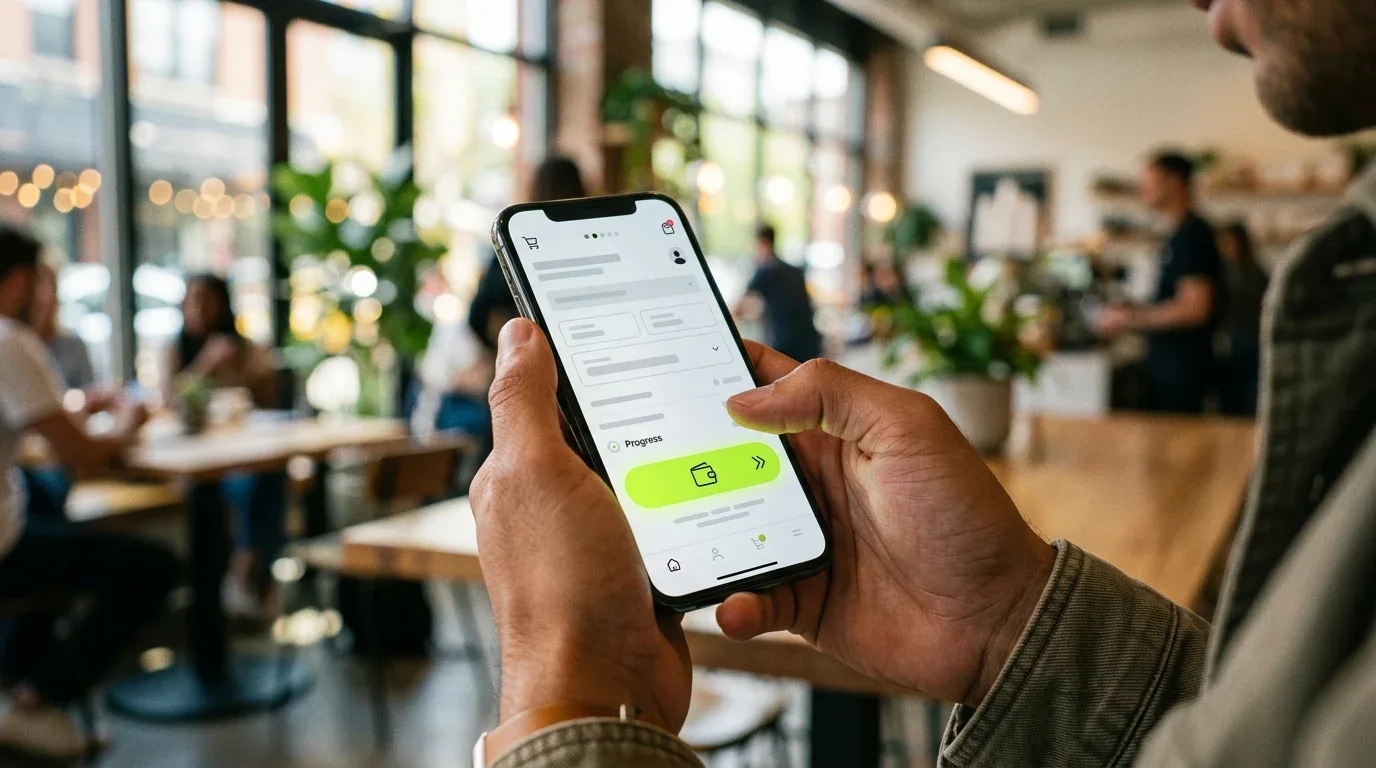
- 10. Design mobile-first. Use thumb-friendly buttons, a sticky add-to-cart bar, a simple menu with search front and center, and pop-ups that never cover the whole screen.
Trust, reviews and social proof: 3 ways to build confidence
Shoppers buying from a brand they don’t know, often in another country, need reassurance before they hand over their card details.
- 11. Show genuine customer reviews. Display star ratings on category and product pages, and encourage photo reviews. Products with reviews consistently convert better than those without.
- 12. Display trust signals. HTTPS, recognized payment logos, clear contact details, a real returns policy and visible delivery guarantees all reduce perceived risk.
- 13. Use social proof thoughtfully. “Bestseller” badges, user-generated content and creator content help, as long as they’re honest. Fake scarcity damages trust and can breach consumer protection rules in many countries.
A/B testing and personalization: 2 ways to keep improving
- 14. Test, don’t guess. Run A/B tests on high-traffic pages with one clear hypothesis per test, such as “Showing delivery dates under the price will increase add-to-cart rate.” Run each test for at least two full business weeks and until it reaches statistical significance.
- 15. Personalize the journey. Show recently viewed items, relevant cross-sells and region-specific offers. Personalized product recommendations work especially well for returning visitors and email traffic.
CRO is not a one-off project. The stores that win treat it as a habit: measure, find the biggest leak, test a fix, and repeat every month.
Common ecommerce CRO mistakes to avoid
- Copying competitors blindly. What works for a global marketplace may not work for your audience or price point.
- Calling tests too early. Stopping a test after three days of “winning” is the most common way to ship a change that actually hurts sales.
- Optimizing for clicks, not revenue. Track revenue per visitor and average order value, not just conversion rate. Heavy discounts can raise conversions while shrinking profit.
- Ignoring mobile. Reviewing designs only on a desktop monitor hides the problems most of your customers actually experience.
- Driving low-intent traffic. Sometimes a “conversion problem” is really a targeting problem. Well-structured Google Shopping and search campaigns bring visitors who are ready to buy.
Final thoughts
Ecommerce conversion rate optimization is the fastest way to grow revenue from the traffic you already pay for. Start with data, fix the biggest leaks in your product pages and checkout, make your store fast and mobile-friendly, build trust at every step, and test your way to steady, compounding gains. Even a 0.5 percentage-point lift can be worth more than doubling your ad budget.
Want expert eyes on your store? Our conversion rate optimization team works with ecommerce brands worldwide, alongside our paid search and performance marketing specialists. Contact us for a free CRO audit and we’ll show you exactly where your store is losing sales.